Your team is ready to work. Their fuel cards should be too. No waiting for the mail, no temporary workarounds, and no unnecessary paperwork.

Your new technician has completed onboarding. Their first jobs are scheduled, their van is ready, and customers are expecting them.
There's just one problem: their fuel card hasn't arrived.
Now someone has to figure out how they'll pay for fuel. Maybe the driver uses their own money. Maybe a manager lends them another card. Or someone in the office has to arrange payment before they can get back on the road.
All because a piece of plastic is somewhere in the mail.
We use our phones to pay for groceries, coffee and just about everything else. So why should paying for fuel at work be any different?
Traditional fleet cards come with a familiar process. Order the card, wait for delivery, get it to the driver and hope it doesn't get lost along the way.
For a business with 15 vehicles, that might be an occasional inconvenience.
For a company managing 200 vehicles, it's a different story.
New employees join. Drivers change roles. Teams expand. Cards get lost or damaged. And every time someone needs a new card, there's another delivery to coordinate.
In the meantime, the business still needs to keep moving.
Employees may end up paying out of pocket and submitting expense claims. Managers spend time arranging alternative payments. Finance teams have more receipts and reimbursements to sort through.
The problem isn't just waiting for a card. It's all the extra work that comes with waiting.
And that extra work has a cost.
When a driver doesn't have their fuel card, the easiest workaround is often to have them pay personally and submit an expense claim.
But the fuel isn't the only thing the business ends up paying for.
There's also the time spent collecting receipts, submitting claims, approving expenses and arranging reimbursement.
And that administrative work can add up.
Research from the Global Business Travel Association found that processing a travel expense report cost an average of $58, with 19% of reports containing errors or missing information. Correcting those reports required another 18 minutes on average.
$58 | Average cost to process a travel expense report
19% | Of reports contain errors or missing information
18 min | Extra time to correct each of those reports
Source: GBTA Foundation and HRS, Expense Reporting: Global Practices and Pain Points (2015)
Those figures come from a 2015 study of travel expense reporting, not fuel purchases specifically. But they illustrate something important: the cost of managing an expense can extend well beyond the purchase itself.
Now consider a company with 100 drivers. If even a handful are regularly paying out of pocket for fuel, the business is creating reimbursement work that doesn't need to exist.
And as fleets grow, so does the potential for unnecessary administrative work.
The opportunity isn't simply to make fuel cards arrive faster.
It's to remove the need to wait for them in the first place.
With Fillip, getting a driver ready to pay is simple.
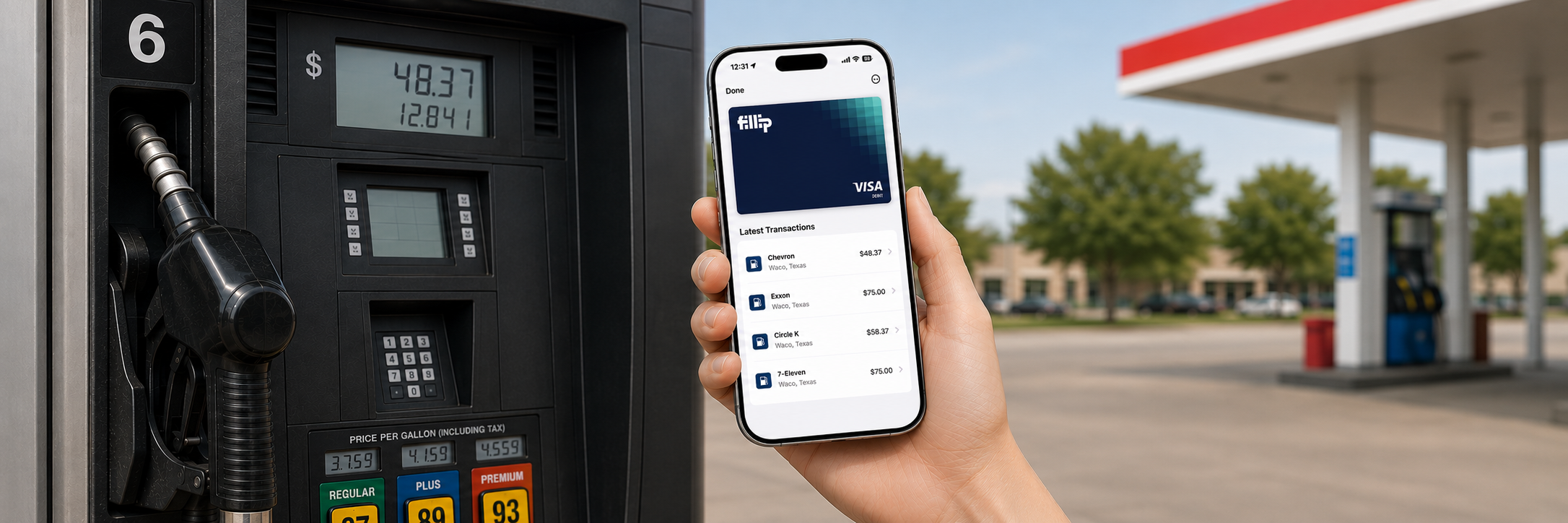
Invite them to Fillip, and they can get their digital card right on their phone. They add it to Apple Wallet or Google Wallet, just like any other payment card.
That's it. No plastic to distribute. No waiting for the mail.
Once their card is ready to use, they can tap their phone to pay at fuel stations and other businesses that accept contactless Visa payments.
For a new technician, that means one less thing standing between them and their first job.
For a fleet manager, it means no longer having to coordinate physical card deliveries every time someone joins the team.
And for a growing business, it means getting more drivers equipped without creating more administrative work.
The card is digital. The process is simple. And your team can get on with their day.
Making payments easier for drivers shouldn't make managing spending harder for the business.
With Fillip, you decide what your team can spend, how much they can spend and when they can use their cards.
A service technician might need fuel and replacement parts. A delivery driver might only need fuel. Someone working evenings might need different spending hours from a driver on a regular daytime schedule.
You can set spending controls that reflect how your team actually works.
And when a driver makes a purchase, you can see their transaction activity in Fillip instead of waiting for a monthly statement to find out what happened.
Drivers can also submit receipts digitally, helping keep purchase information together and making expense reviews easier.
It's a simpler experience on both sides.
Drivers get a familiar way to pay. Managers get the visibility and controls they need. And the business spends less time dealing with cards, receipts and workarounds.
Digital cards make everyday purchasing easier, but there are still situations where a physical card makes sense.
Some fuel stations don't support contactless payments. Some drivers prefer a physical card. And certain jobs or purchasing situations may call for one.
That's fine.
Fillip offers physical cards too.
The difference is that you don't have to make everyone wait for one.
Your team can use their phones for everyday purchases wherever contactless Visa is accepted, with physical cards available when needed.
It's not about getting rid of plastic entirely. It's about giving your business a better starting point.
Running a fleet means keeping a lot of things moving.
Vehicles need maintenance. Jobs need scheduling. New employees need equipment. Customers expect your team to show up ready to work.
Getting a driver a fuel card shouldn't be another thing on your list.
And as the research shows, the inconvenience of waiting can extend beyond the card itself. Every reimbursement, missing receipt and manual approval creates work that takes time away from running the business.
With Fillip, you can issue digital cards instantly, give drivers a familiar way to pay and manage spending from one place.
Whether you're adding your next technician or equipping an entire team, the process should be just as simple.
Your drivers already have their phones. Give them a card that's ready when they are.
Fillip for fleets
Give drivers their own cards with the limits you set, and see every purchase by driver and vehicle.