Winter brings unexpected expenses for businesses with vehicles on the road. Here's how to give drivers the flexibility to make everyday purchases while keeping spending under control.

A technician stops for washer fluid on the way to a job and notices a worn wiper blade. Neither purchase is complicated. But if they have to call the owner to ask which card to use, a five-minute stop suddenly becomes an interruption for two people.
Now multiply those interruptions across a dozen vehicles, each with its own schedule, driver and unexpected needs.
Canadian winters are unpredictable enough. Managing what your drivers spend shouldn't have to be.
The challenge isn't preventing every unexpected purchase. It's making sure drivers can handle what comes up without leaving business owners wondering where their money went.
When you're running a business with multiple vehicles, not every purchase deserves your attention.
Fuel, washer fluid, replacement wiper blades and other everyday expenses are part of keeping vehicles on the road. Yet for many businesses, even simple purchases can involve a phone call, a shared company card or an employee paying out of pocket and waiting for reimbursement.
None of those options makes life particularly easy.
A driver should be able to handle routine expenses without interrupting their manager. And a business owner should be able to trust that those purchases fall within the limits they've established.
That's where having the right spending controls makes a difference.
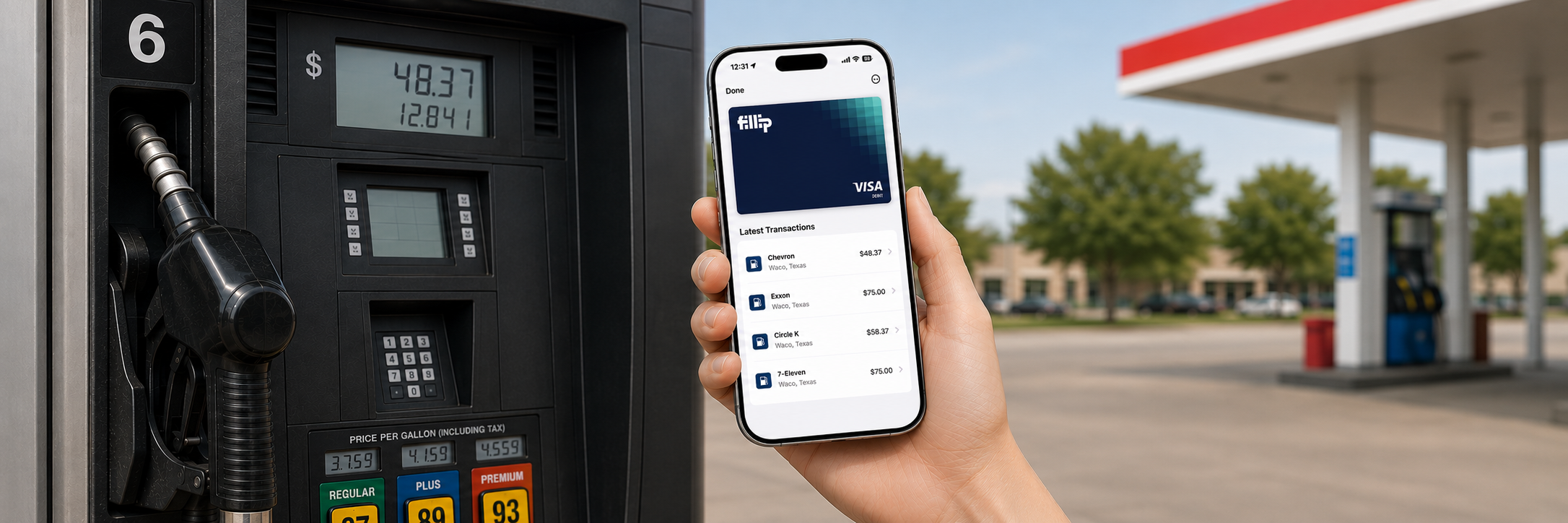
With Fillip, businesses can give drivers their own digital payment cards and establish budgets, transaction limits and purchasing schedules. A technician can pay for an approved purchase using their phone, while the business maintains control over how much they can spend and when.
The result is straightforward: drivers spend less time asking for permission, and owners spend less time answering routine questions.
It's tempting to give every driver the same spending limit. After all, consistency seems like the simplest way to manage a fleet.
But a technician travelling between service calls has different purchasing needs than someone making scheduled deliveries.
One might regularly need replacement parts or supplies. Another might only need to refuel during their shift.
Giving both drivers identical purchasing rules can create unnecessary friction. The goal isn't to restrict everyone equally. It's to give each person the flexibility their work requires.
And sometimes, even well-designed limits need to change.
Imagine a service van needs an unexpected repair between appointments. The technician finds a nearby repair shop, but the cost exceeds their normal spending limit.
With Fillip, a manager can adjust that driver's individual spending controls to accommodate the repair, then return them to their usual settings afterward.
The driver can get the vehicle back on the road without the business having to loosen spending controls for everyone.
Good spending controls should reduce the decisions an owner has to make, not simply move those decisions to the roadside.
Making purchases easier is only half the equation.
The other half is understanding where the money goes.
Consider a plumbing business with 12 service vans. Throughout the week, drivers are refuelling, replacing small parts and occasionally paying for unexpected vehicle expenses.
Each transaction might be perfectly reasonable. But when those purchases appear across multiple cards, receipts and bank statements, understanding the full picture becomes difficult.
A $75 charge from an auto-parts store tells you where the money was spent. It doesn't necessarily tell you which vehicle needed the part, who purchased it or whether it's the third similar expense for that van this month.
That context matters.
With Fillip, transactions are connected to drivers and vehicles, giving businesses a clearer view of spending across their fleet. Drivers can also submit receipts digitally, keeping important purchase information together rather than scattered across text messages, emails and gloveboxes.
Instead of spending time figuring out what happened, owners have a better starting point for understanding their costs.
And as a business grows, that visibility becomes increasingly valuable.
When you're operating three vehicles, you might remember which van needed repairs last week. When you're managing 20, relying on memory becomes a lot less practical.
Having spending information organized by driver and vehicle helps owners identify expenses that deserve a closer look without having to personally oversee every purchase.
When businesses think about fleet expenses, they naturally focus on fuel, maintenance and repairs.
But there's another cost that's easy to overlook: the time spent managing those purchases.
Consider what happens when a driver needs something unexpectedly.
They call the office. The owner stops what they're doing to answer. They discuss the purchase, figure out how to pay and eventually get the driver moving again.
Later, someone might need to track down the receipt or figure out which vehicle the expense belongs to.
None of those individual tasks seems particularly significant.
But across multiple drivers and vehicles, they can become a regular distraction from the work that actually generates revenue.
For a small business owner, that might mean taking calls between customer appointments. For an office administrator, it might mean spending Friday afternoon matching receipts to transactions.
The purchase itself isn't necessarily the problem. It's everything happening around it.
Digital payment cards, spending controls and organized transaction records can help remove much of that friction.
And when drivers can make approved purchases wherever Visa is accepted, they're not limited to finding a particular fuel station or supplier just to use their company card.
That flexibility matters when a technician is working across town, a delivery route changes or winter weather makes the usual stop impractical.
Winter will always create unexpected situations.
A vehicle might need a repair. A driver might need supplies they didn't anticipate. A routine stop might cost more than expected.
Businesses can't plan for every purchase, and they shouldn't have to.
What they can do is make everyday spending easier to manage.
Give drivers a straightforward way to pay. Establish controls that reflect how they actually work. Make it easy to adjust individual limits when circumstances change. And keep the information needed to understand those purchases connected to the right people and vehicles.
That's the thinking behind Fillip's Fleet Finance Platform: bringing payments, spending controls and fleet visibility together so businesses can spend less time managing transactions and more time running their operations.
Because at the end of the day, your drivers have jobs to finish. You have a business to run.
Neither should have to stop for a bottle of washer fluid.
Ready to make winter spending easier for your drivers? Get in touch with our team to see how Fillip can work for your fleet.
Fillip for fleets
Give drivers their own cards with the limits you set, and see every purchase by driver and vehicle.